Filtered Through a Feed: How Instagram Both Wrecked and Rescued Film Photography
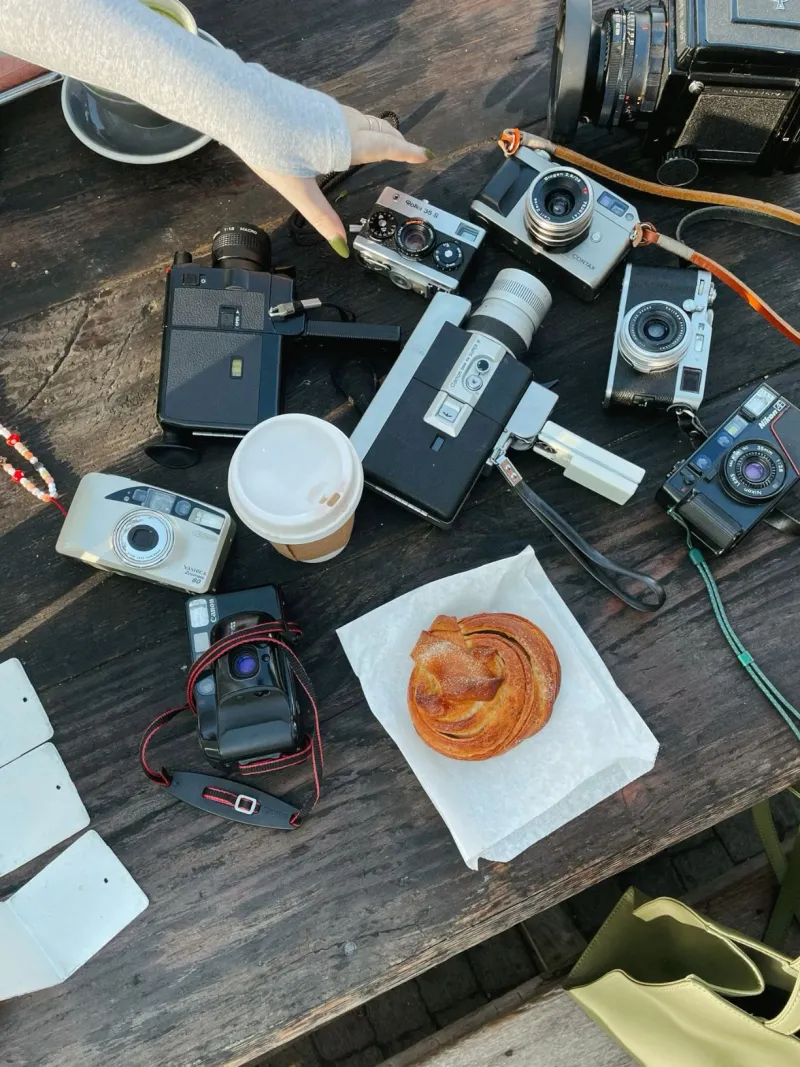
Photo: person scrolling Instagram on phone with 35mm film camera on table vintage aesthetic, via i.pinimg.com
There's a version of this story where Instagram killed film photography. There's another version where it saved it. The uncomfortable truth is that both stories are completely accurate — and depending on who you ask inside the analog community, one tends to feel a lot more real than the other.
Let's unpack it.
The Aesthetic Industrial Complex
Somewhere around 2015, a very specific look started dominating certain corners of Instagram. Washed-out highlights. Visible grain. Those telltale color shifts that come from shooting Kodak Portra or Fuji 400H. Light leaks that, in a previous era, would have sent a photographer reaching for the trash can were suddenly getting thousands of likes.
Film photography had become a vibe.
And look — there's nothing inherently wrong with that. Any movement that gets more people interested in a medium that was genuinely on life support a decade ago deserves at least some credit. Film stocks that were quietly being discontinued started selling out. Camera shops that had been hemorrhaging customers saw foot traffic tick back up. Kodak didn't bring back Ektachrome because of a sudden corporate change of heart. Market demand moved that needle.
But the commodification came with a cost. The "film look" became something you could buy in a Lightroom preset pack for $19.99. VSCO built an entire company on the idea that digital photographers deserved to look like they'd loaded a roll of Tri-X without the inconvenience of actually doing so. The aesthetic got decoupled from the process, and for a lot of longtime film shooters, that felt like a kind of theft.
What Gets Lost in the Scroll
Here's what Instagram is genuinely bad at communicating: film photography is slow. Intentionally, beautifully, sometimes frustratingly slow.
You don't get 36 chances to nail a shot and then immediately review them on a screen. You load a roll, you shoot it over days or weeks, you send it to a lab or develop it yourself, you wait. That waiting period — the not knowing — is a core part of what makes the medium feel alive. It's the analog equivalent of anticipation, and it produces a different kind of engagement with your subject than the instant feedback loop of a mirrorless camera.
A curated Instagram grid of gorgeous film scans tells you nothing about that experience. It tells you what the output looks like, not what the process feels like. And for photographers who discovered film through social media, that gap between the feed and the actual practice can be genuinely disorienting. They came for the grain and the warm tones, and then they found out you have to actually figure out exposure, deal with a camera that might be 40 years old, and wait two weeks to see if you nailed it.
Some of them bounce. But a lot of them stay.
The Gatekeeping Problem
Ask any longtime film photographer about Instagram and you'll eventually get to the gatekeeping conversation. It's unavoidable. There's a vocal contingent within the analog community that resents the influx of newcomers who arrived via social media — the ones who bought a Pentax K1000 because it looked cool in someone's flat lay, or who shoot one roll a year and call themselves film photographers.
The gatekeeping instinct is understandable, even if it's ultimately counterproductive. When something you care deeply about gets turned into a trend, it feels reductive. Watching people treat your medium as an accessory — something to photograph alongside their coffee and their vintage Levi's — is legitimately frustrating when you've been hauling a light meter and a bag full of canisters to every shoot for years.
But here's the thing: gatekeeping in photography has never once made photography better. It's just made communities smaller and more hostile. The kid who bought a Canon AE-1 because it looked cool on TikTok might, if given half a chance, turn into someone who develops their own black-and-white in a bathroom at midnight and talks about film the way the old guard does — with genuine reverence. Or they might not. Either way, their presence in the market is part of why Kodak kept the lights on.
The Discovery Pipeline Is Real
Let's give social media its due credit here, because it deserves more than it usually gets from the film community.
For a generation that grew up entirely digital, Instagram and TikTok have functioned as a genuine discovery mechanism for 35mm. These are people who had no reason to know that film photography existed as a living practice — not just a museum piece or something their parents did. They saw a photo on a feed, felt something about the way it looked, and went looking for the camera that made it.
That's not a fake origin story. That's how culture actually spreads now. The pathway from "I saw a photo I liked" to "I just developed my first roll" is shorter than it's ever been, and social media is the bridge.
Film photography YouTubers and Instagram accounts with serious followings — people building genuine educational communities around the craft — have done more to demystify the technical side of shooting analog than any camera manual ever could. When a 19-year-old in Ohio can watch a 20-minute video about metering for slide film and then go buy a used Olympus OM-1 with some degree of confidence, that's social media working exactly the way it should.
The Double Exposure
The honest answer to whether Instagram ruined or saved film photography is that it did both, simultaneously, and the balance sheet probably comes out slightly positive.
The medium was commodified, sure. The aesthetic got divorced from the process in ways that still irritate serious practitioners. The word "filmic" got co-opted by preset sellers and Instagram filters until it lost most of its meaning. All of that happened.
But film labs that might have closed are still open. Film stocks that might have been discontinued are back in production. Camera stores that might have shuttered are selling out of inventory. And there's a whole wave of photographers in their 20s who are genuinely obsessed with the process — not just the look — because a social media algorithm showed them something that made them feel something.
Film photography doesn't need Instagram to survive. But Instagram gave it a second wind at a moment when it really needed one. That's worth acknowledging, even if the way it happened wasn't always pretty.
Shoot your roll. Let the feed do what it does. The frame matters more than the likes.