Possessed by Glass: The Obsessive World of Contax Camera Collectors

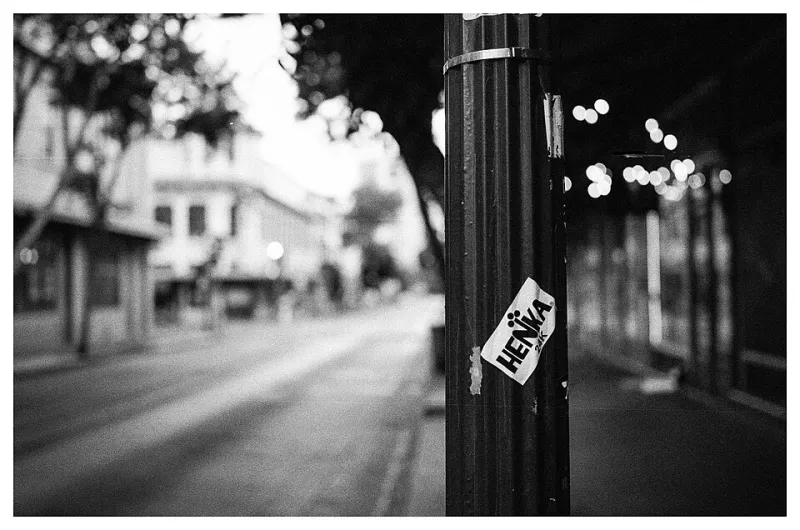
Photo: PASAPHC2024, CC0, via Wikimedia Commons
There's a particular kind of silence that falls over a camera shop when someone pulls a Contax RTS III off the shelf. Other shoppers glance over. The guy behind the counter straightens up. Even people who've never heard of the brand seem to sense that something significant just happened. That reaction — half reverence, half confusion — pretty much captures what it's like to exist inside the Contax community.
For the uninitiated, Contax is a name that reads like a footnote. It never had the mainstream muscle of Canon or Nikon, never showed up in every suburban camera store from Phoenix to Pittsburgh. But among a very specific type of film shooter — the kind who reads lens MTF charts for fun and argues about bokeh rendering at 2 a.m. — Contax is practically religion.
So what's actually going on here? Is this genuine optical superiority, or is the Contax mystique just the analog world's most expensive case of nostalgia-driven gatekeeping?
A Brand Born from Two Worlds
To understand Contax, you have to understand its weird, bifurcated history. The name first appeared in 1932, under Zeiss Ikon in Germany. Those early cameras were serious precision instruments, built to compete with Leica at a time when German optical engineering was considered the global gold standard. The original Contax rangefinders were complicated, sometimes frustrating, and genuinely extraordinary.
Fast forward to the 1970s. Zeiss partners with Yashica — a Japanese manufacturer — to resurrect the Contax brand for a new generation of SLRs. The result is the Contax/Yashica mount system, a lineup of cameras that combined Japanese manufacturing reliability with West German Zeiss optics. It was an unlikely marriage that somehow worked beautifully.
That collaboration produced cameras like the Contax RTS, the ST, the RX, and eventually the RTS III — plus the beloved Contax T2 and T3 compact cameras that became darlings of the fashion photography world. Each body was built with an almost absurd attention to detail, using materials and tolerances that most camera manufacturers simply weren't bothering with.
The Zeiss Factor
Here's the thing you need to understand about why people lose their minds over Contax: it's almost never about the bodies. It's about the glass.
The Contax/Yashica mount system gave photographers access to Carl Zeiss lenses — actual Zeiss glass, manufactured in West Germany, bearing names like Planar, Distagon, and Sonnar. These weren't licensed designs or optical approximations. They were the real thing, and they rendered images in a way that's genuinely difficult to explain without sounding like you've joined a cult.
Contax Zeiss lenses produce a particular kind of three-dimensionality. Subjects seem to lift off the film plane. Backgrounds dissolve into smooth, painterly blur. Contrast is punchy but never harsh. Photographers who shoot with a 50mm f/1.4 Planar for the first time often describe a moment of genuine disorientation — like they've been looking at the world through a screen door their whole life and someone finally pulled it aside.
Is some of that perception? Absolutely. But enough working photographers — people who shoot for money, not for gear forums — have reached the same conclusion that it's hard to dismiss entirely.
The Price Problem
All of this reputation comes with a serious catch: Contax gear is expensive. Aggressively, sometimes absurdly expensive.
A Contax RTS III body in clean condition routinely sells for $400–$600 on eBay, and that's before you've touched a single lens. The Zeiss Planar 50mm f/1.4 — one of the most celebrated normal lenses in film photography — will set you back anywhere from $350 to $700 depending on condition and where you find it. The 85mm f/1.4 Planar? Budget over a grand. The 35mm f/1.4 Distagon? More than that.
For context, you can buy a fully functional Nikon FM2 with a sharp 50mm lens for under $200. That camera will make excellent photographs. So the question every practical-minded shooter has to ask is: at three to five times the price, does Contax actually deliver three to five times the result?
The honest answer is: it depends on what you're shooting and what you care about. For street photography or documentary work where speed and discretion matter more than ultimate optical performance, probably not. For portrait work, fashion, or any shooting where you're printing large and scrutinizing every millimeter of your negatives, the Zeiss rendering difference becomes much harder to ignore.
The T2 and T3: Fashion's Favorite Film Cameras
No conversation about Contax culture is complete without acknowledging the compact cameras — specifically the T2 and T3 point-and-shoots that became fixtures in fashion and celebrity circles during the late '90s and early 2000s.
The T2 in particular developed a reputation as the camera that serious photographers carried when they weren't carrying serious cameras. It shoots on 35mm film, fits in a jacket pocket, and uses a 38mm f/2.8 Sonnar lens that produces images with that unmistakable Zeiss character. Fashion photographers loved it. Celebrities carried them. Paparazzi shots of models and musicians holding T2s made the rounds and cemented the camera's cultural cachet.
Then social media happened, film nostalgia exploded, and the T2 became the most status-loaded compact camera on the secondhand market. Prices that once hovered around $200–$300 ballooned to $800, $1,000, sometimes more. Whether that's justified by the camera's actual optical performance is debatable. Whether it matters to the people buying them is a different question entirely.
Is the Hype Justified?
Spend enough time in Contax circles and you'll encounter two distinct camps. There are the true believers — photographers who've shot enough Zeiss glass to have earned their conviction, who can point to specific frames and explain exactly why the rendering is different. And there are the gatekeepers — people who've decided that owning Contax equipment is a personality trait and treat anyone shooting Nikon glass like they're eating fast food at a Michelin-starred restaurant.
The truth, as usual, lives somewhere in between.
Contax cameras and Zeiss lenses are genuinely exceptional. The optical performance is real, not imagined. The build quality on bodies like the RTS III is extraordinary — these cameras feel like instruments rather than tools. If you're a working photographer who shoots a lot of film and prioritizes image quality above all else, the investment can absolutely be justified.
But if you're newer to film, or shooting casually, or just trying to decide whether to spend $150 on a solid Canon AE-1 setup versus $800 on a Contax body alone — the honest advice is to start somewhere more forgiving. Learn your craft. Develop your eye. Then, if you find yourself wanting more from your glass, the Contax world will still be there waiting.
The Enduring Pull
What makes Contax genuinely fascinating as a cultural phenomenon isn't just the optical quality — it's the fact that a brand that never dominated any market, that existed in a kind of permanent underdog status relative to Canon and Nikon, managed to inspire this level of devotion decades after the last body rolled off the production line.
That says something interesting about what analog photographers are actually looking for. Not just tools. Not just gear. Something that feels like it was made with intention, by people who cared about what they were building. In that sense, the Contax faithful aren't wrong.
The cameras are that good. The lenses are that good. And sometimes, even in the age of infinite digital options, good enough to make you a little bit possessed.