Broken Seals, Beautiful Accidents: How Light Leaks Became the Most Honest Art in Analog Photography
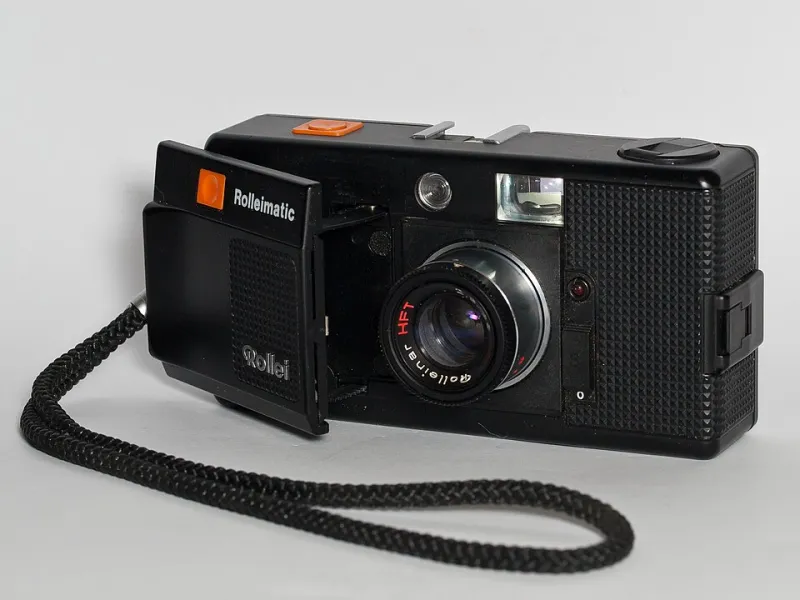
Photo: Salty Lens (Jonny), CC BY 4.0, via Wikimedia Commons
There's a particular kind of heartbreak that every film shooter knows. You crack open a camera back too early, or you pick up a thrift-store find with a rotted foam seal, and your roll comes back from the lab looking like someone dragged a sunset across half your frames. For years, that was just called ruining your shots.
Something shifted, though. Somewhere between the Instagram filter era and the current analog revival, photographers started looking at those burned edges and blazing streaks and seeing something else entirely — something no app, preset, or plugin could convincingly fake. Light leaks stopped being a problem. They became a signature.
What's Actually Happening Inside Your Camera
Before you can use light leaks intentionally, it helps to understand what's going on physically. Film is sensitive to light — obviously — but the camera body is designed to be a sealed, light-tight chamber. The foam weather stripping around the door, the felt light traps at the film cartridge slot, the integrity of the body itself: all of these exist to make sure the only light hitting your emulsion is the light you're deliberately letting in through the lens.
When any part of that system degrades or fails, stray photons find their way to the film. Because film is a physical medium recording real chemical reactions, those intrusions don't show up as clean digital artifacts — they bloom, bleed, and diffuse in ways that are entirely dependent on the angle of the light source, the speed of your emulsion, and exactly where the seal has failed. A pinhole leak near the hinge creates a completely different effect than a compromised cartridge slot. The result is always unique, always unrepeatable.
That unpredictability is exactly the point.
The Photographers Who Got There First
Long before light leaks became a hashtag, certain photographers were actively courting camera damage as a creative strategy. Nan Goldin's raw, intimate work from the 1970s and '80s often embraced imperfection as emotional truth — the idea that a technically perfect image might actually be less honest than one that shows the chaos of its own making. Diana camera users in the Lomography movement of the '90s built an entire aesthetic philosophy around unpredictable exposures, vignetting, and yes, rampant light leaks from the camera's notoriously flimsy plastic construction.
More recently, photographers like Ryan McGinley have leaned into accidental exposure as part of a larger conversation about spontaneity and youth culture. There's a reason his work feels alive in a way that heavily controlled studio photography often doesn't — some of that energy literally comes from light finding ways into places it wasn't supposed to go.
The through-line in all of it is authenticity. A light leak is proof that something real happened. The camera was there. The film was there. Physics did what physics does.
Why Apps Will Never Nail This
Here's the honest truth about every light leak filter you've ever seen on a phone: it looks like a light leak the same way a cardboard box looks like a car. The shape is vaguely right, but nothing about it convinces anyone who's held the real thing.
Digital light leak simulations are applied uniformly over an already-complete image. Real leaks interact with the actual exposure — they're part of the same chemical process, layered into the same grain structure, responding to the same tonal range your image was captured in. A streak of orange light bleeding across a portrait isn't just an orange overlay; it's physically mixed into the silver halides of the emulsion. The grain lives inside it. The color shifts underneath it. You cannot fake that relationship in post.
This is part of what makes analog photography feel tactile and credible in a way that even the most sophisticated digital emulation struggles to match. The imperfection has provenance.
How to Work With Leaks Intentionally
If you want to start using light leaks as a deliberate tool rather than leaving everything to chance, there are a few approaches worth experimenting with.
Seek out cameras with known leak issues. Holga and Diana cameras are the obvious starting points — their plastic bodies and loose tolerances are practically leak factories. But plenty of older 35mm cameras have degraded seals that produce subtler, more unpredictable results. A beat-up Olympus Stylus or an early-'80s point-and-shoot with a questionable door latch can yield gorgeous, surprising leaks without completely destroying your roll.
Control the direction of your light source. If you're shooting on a sunny day with a leaky camera, the position of the sun relative to the camera body matters enormously. Backlighting tends to push leaks toward the edges of the frame; side lighting can create dramatic diagonal streaks. Experiment by rotating your camera or shooting at different times of day.
Double-expose deliberately. Some photographers create intentional light leaks by advancing the film partially between shots or by briefly cracking the camera back in a controlled way — a split second of exposure to a bright light source before closing it back up. This is high-risk, high-reward territory, and you'll lose some frames entirely, but the results can be extraordinary.
Choose your emulsion wisely. Higher-speed films like Kodak Ultramax 400 or Ilford HP5 are more sensitive and will show leaks more dramatically. If you want subtler effects, slower emulsions like Kodak Gold 200 or Fuji 200 will pick up leaks but render them with less intensity. Black and white film creates leaks that read as blown highlights and deep shadow intrusions — a completely different mood than the warm orange and red bleeds you get on color negative.
Embrace the roll, not the frame. Light leaks don't respect your composition. Accept early that some frames on a leaky roll will be unusable, and shoot more than you think you need. The keepers from a leak-heavy roll often feel more precious for exactly that reason — they survived something.
The Bigger Conversation
There's something worth sitting with here that goes beyond photography technique. We live in a moment when nearly every visual experience we have is processed, filtered, corrected, and optimized before it reaches us. Faces are smoothed. Colors are graded. Grain is removed. The entire thrust of digital imaging technology for the past two decades has been toward control — toward eliminating the evidence that anything messy or physical was involved in making a picture.
Light leaks are the opposite of that. They're a reminder that photography, at its core, is a physical process happening in an imperfect world. Your camera is an object with a history. The film inside it is a chemical system with its own sensitivities and quirks. When light finds a crack and bleeds across your frame, it's not a failure — it's the camera telling you it was really there.
That's a language worth learning to speak.
Next time your roll comes back from the lab with a streak of amber fire burning across the corner of your favorite shot, hold off before you call it ruined. Look at it again. Sometimes the accident is the art.