Ghosts in a Canister: What Undeveloped Film Rolls From the Family Attic Are Really Worth
There's a particular kind of silence that settles over you when you find an undeveloped roll of film tucked inside a dead relative's camera. It's not like finding old photos — those are already fixed, already knowable. An undeveloped roll is something stranger: a sealed promise. Whatever's on it, no human eye has seen it yet. The shutter clicked, light hit silver, and then the whole thing got stuffed in a drawer and forgotten for twenty, thirty, maybe fifty years.
For a growing number of analog photographers and family archivists across the US, that little metal canister represents something genuinely irreplaceable. And the culture around rescuing these rolls — developing them, printing them, sharing them — has quietly become one of the more emotionally charged corners of the film community.
How These Rolls Turn Up
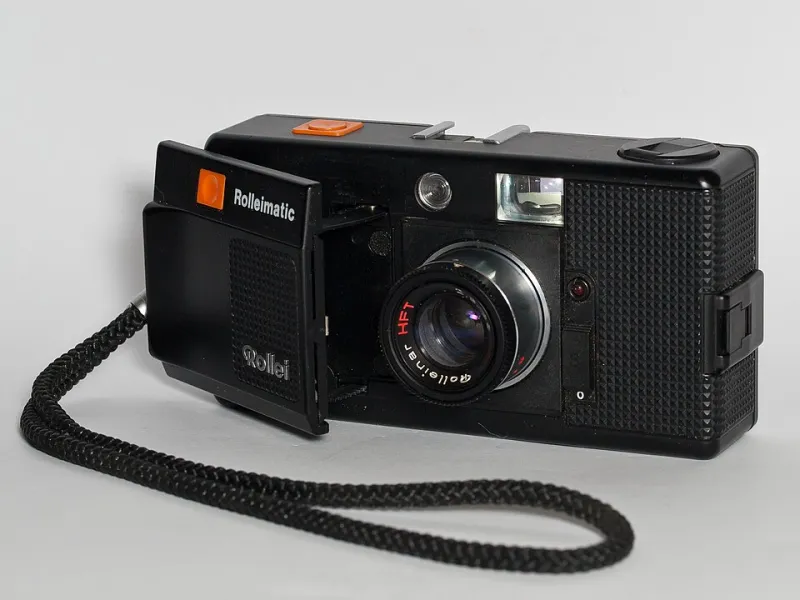
The discovery stories are almost always the same kind of mundane miracle. Someone cleans out a parent's house after a death. A grandkid finds a 1970s Instamatic at a Goodwill with the film door still closed. An estate sale picker buys a lot of old camera equipment and finds three partially-shot rolls rattling around inside a Canonet. Sometimes people donate cameras to thrift stores without even realizing there's an exposed roll still loaded inside.
The rolls surface at flea markets, on eBay listings for vintage cameras, and deep in attic boxes alongside Christmas ornaments and old tax returns. Reddit's r/analog community has entire threads dedicated to these finds, with users posting their recovered images alongside the stories of where the cameras came from. It's become something of a genre unto itself.
And the images that emerge? Sometimes mundane. Sometimes devastating in the best possible way.
The Technical Reality of Old, Undeveloped Film
Let's be straight with you: developing decades-old exposed film is not a guaranteed win. Film degrades. Heat, humidity, and background radiation all work against the latent image sitting on that emulsion. A roll left in an attic in Phoenix for thirty summers has had a much harder life than one stored in a cool basement in Vermont.
That said, the results can be surprisingly good — especially if the film was kept in its original canister (which limits moisture and light) and the storage conditions were relatively stable. Black-and-white film tends to survive longer than color, because the dye layers in color film are more vulnerable to chemical breakdown over time. C-41 color negative film from the 1980s and 1990s can still yield usable images, though expect heavy color shifts toward red or magenta as the cyan dye layer fades first.
If you're working with film that's genuinely old — think pre-1970s — you might be dealing with different film bases entirely, some of which require specialized handling. Anything potentially on nitrate base (pre-1951, roughly) should go straight to a professional conservator, not your local lab. That's not hyperbole; nitrate film is a genuine fire hazard.
For everything else, a good lab with experience in push processing and expired film is your best starting point. Be upfront with them about what you've got. A reputable lab will often try a clip test — developing just a small section of the film first to gauge what they're working with before committing the whole roll.
The Ethical Layer Nobody Talks About
Here's where it gets interesting, and a little complicated. When the film belongs to your own family, the decision to develop it is usually straightforward. But what about rolls found inside cameras purchased at estate sales? Or film discovered in donated equipment from a stranger's collection?
The people in those photographs never consented to having their images shared publicly — because they had no idea anyone would ever see them at all. That birthday party from 1978, that candid of someone who might have been a lover, that image of a child who is now an adult in their fifties — all of it carries a kind of privacy weight that regular photography doesn't.
Most people in the analog community handle this with a reasonable amount of care. Sharing images online without identifying information, avoiding anything that looks genuinely private or compromising, and treating the subjects with basic human dignity are unwritten norms that have developed organically. But it's worth sitting with the question before you post a stranger's personal moments to Instagram for the aesthetic.
That said, there's a strong counter-argument: these images, if left undeveloped, disappear entirely. The people in them vanish from the record. Bringing them into the light — literally — gives them a kind of continued existence they wouldn't otherwise have.
When Found Film Becomes Real Art
Some photographers have turned this practice into serious creative work. Photographer Rescued Film Project, based out of the broader US analog community, has documented thousands of rolls of found and forgotten film, treating each recovery as both archival preservation and artistic collaboration with the unknown original photographer.
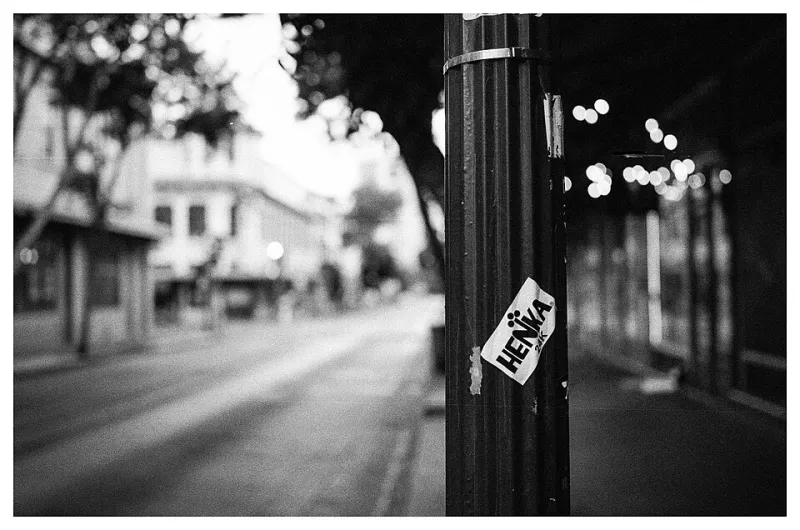
The aesthetic qualities of degraded film — heavy grain, color drift, fogged edges, strange double exposures where the camera was accidentally rewound — have a visual character that's genuinely impossible to fake convincingly in post-processing. The imperfections aren't bugs. They're the record of time itself sitting on the emulsion.
Several photographers have built entire exhibition projects around found family film. The concept resonates because it collapses time in a way that feels almost supernatural: you're looking at a moment that happened before you were born, captured by someone who may no longer be alive, rendered visible for the first time by your hands.
What To Do If You Find a Roll
If you've got mystery film sitting in a camera or a canister and you're not sure what to do with it, here's a practical starting point:
Don't open it in the light. Even if you think the film is decades old and probably ruined, load it into a changing bag or darkroom before you pop the canister. You have nothing to lose by being careful.
Identify the film if you can. The canister label, if it's still readable, will tell you the type and ISO. That information helps the lab dial in their processing approach.
Find a lab with experience in expired film. Not every lab is comfortable with this kind of work. Ask before you send it. Local labs that cater to the film community are often a better bet than high-volume mail-order operations for something this specific.
Manage your expectations — and stay open to surprise. Some rolls come back blank. Some come back with a handful of usable frames. And occasionally, something extraordinary walks out of the developer. The uncertainty is part of the deal.
Keep notes on where the camera came from. Even basic provenance — the estate sale location, the rough date, the camera model — adds context that makes the recovered images more meaningful.
The Bigger Picture
What the found-film movement really reflects is something the analog community has always understood intuitively: photographs are not just images. They're physical objects with histories, made by specific people at specific moments, carrying the texture of real time in their grain structure and their chemistry.
A JPEG file on a hard drive doesn't age. It doesn't degrade into something beautiful and strange. It doesn't wait in a canister for fifty years to be seen for the first time.
Film does. And that waiting — that latency — is part of what makes it matter.