36 Frames and That's It: How Film's Hard Limit Is Making Photographers Better
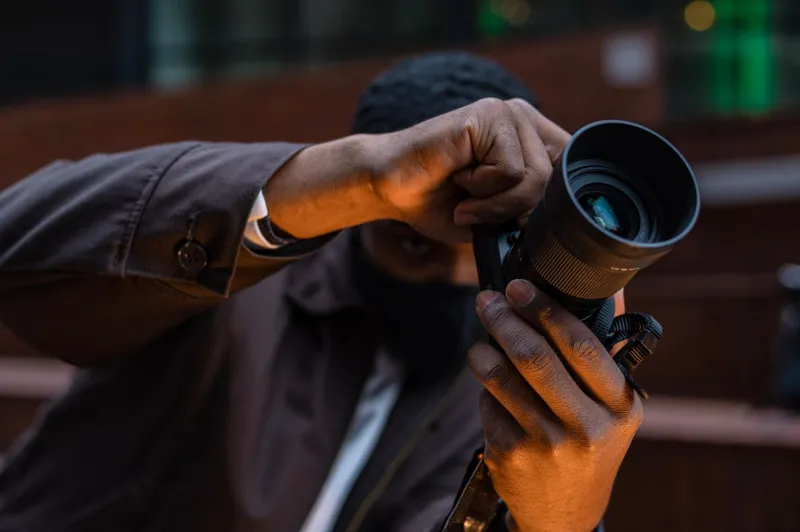
There's a moment every film shooter knows. You're out on a shoot, the light is doing something incredible, and you hear the resistance in the advance lever. You're on frame 34. Maybe 35. The roll is almost gone, and suddenly every remaining frame feels like a small, ticking thing you don't want to waste.
That feeling? That's not a bug. That's the whole point.
A growing number of photographers — many of them people who grew up with digital — are choosing 35mm film specifically because it forces them into a corner. No burst mode. No delete button. No 2,000-frame buffer card. Just a canister of 36 exposures, a manual advance lever, and the sound of your own heartbeat before you press the shutter.
The Psychology of Scarcity
When digital cameras arrived in force, the photography world celebrated the freedom of it all. Shoot everything. Edit later. The cost per frame dropped to essentially zero. That freedom was real, and it genuinely opened photography up to people who couldn't afford to burn through rolls.
But something else happened, too. Shooting became cheap in a different sense — not just financially, but mentally. When nothing costs you anything, nothing feels like it matters very much.
Marcus Webb, a photographer based in Austin who shoots street work almost exclusively on a battered Nikon FM2, describes the shift bluntly. "I used to shoot digital events and come home with 800 photos from a two-hour gig. I'd sit down to edit and feel completely numb. They all kind of looked the same. I wasn't deciding anything out there — I was just holding a button down and hoping."
He loaded his first roll of Kodak Tri-X about four years ago on a whim. He came home with 36 frames. He loved almost all of them.
"It wasn't that I suddenly became a better photographer overnight," he says. "It's that I was forced to slow down and actually look before I shot. The camera made me do it."
This is the psychological core of what's happening in the analog community right now. Film's mechanical constraints aren't just inconveniences to be tolerated — for a lot of shooters, they're the entire reason to use the medium.
The Sound of Commitment
There's a tactile and auditory dimension to film shooting that doesn't get talked about enough. The advance lever. The shutter curtain. The soft click of a well-worn camera body. These aren't just satisfying sounds — they're confirmation signals. They tell you that something happened. That a decision was made.
Nadia Okonkwo shoots weddings in Atlanta, and she made the unusual call to bring a film camera as her secondary body about three years ago. Her couples almost always end up preferring some of the film frames.
"There's something about knowing you only have a few frames left that makes you really look at people," she says. "I'm watching for the exact moment, not just firing and hoping to catch it somewhere in a 10-frame burst. You can feel the difference in the images."
She's not the only wedding or portrait photographer who's noticed this. The deliberateness that film demands tends to produce photographs that feel considered rather than harvested.
What 'Spray and Pray' Actually Costs You
The term "spray and pray" — firing off rapid bursts and hoping one frame is sharp — has become a bit of a punchline in film circles. But it's worth taking seriously as a creative problem, not just an aesthetic one.
When you shoot in bursts, you're outsourcing the decisive moment to statistics. If you fire 20 frames per second, the odds are good that one of them will be technically sharp. But technical sharpness isn't the same as a great photograph. The frame that's in focus isn't necessarily the frame where the subject's expression was right, or where the geometry of the scene clicked into place.
Film photographers don't get to play those odds. They have to develop an eye for anticipation — reading a scene before it fully resolves, positioning themselves correctly, and committing to a single frame at the right moment.
This is a skill. And like most skills, it atrophies when you don't use it.
Dan Cortez, who teaches photography workshops in Chicago, has started incorporating a "film simulation" exercise into his digital photography classes — not using actual film, but artificially limiting students to one frame every 30 seconds.
"The results are immediate and kind of dramatic," he says. "Students who were shooting 400 frames in an afternoon start shooting 40. And their keepers go up. Not down. Up. Because they're finally thinking before they shoot."
Relearning How to Miss
Here's the part nobody tells you about switching to film: you're going to miss shots. Real ones. Shots that would have been great.
You'll be a beat too slow on the advance lever. You'll misjudge the light. You'll be on frame 36 when the perfect thing happens. And you won't be able to go back.
This sounds like a downside. In practice, a lot of film shooters describe it as one of the most valuable parts of the whole experience.
"Missing a shot on film teaches you in a way that missing a shot on digital never does," says Webb. "On digital, you just scroll back through your burst and find the closest thing. You never really feel the miss. On film, you feel it. And you remember it. And next time, you're ready."
There's a version of failure that makes you better. Film photography is built around it.
You Can't Delete Your Way to Better Photos
The delete button is one of digital photography's most seductive features and, arguably, one of its most limiting ones. The ability to erase a bad frame means you never have to fully reckon with it. You never have to sit with the question of why it didn't work.
Film makes you confront your mistakes in a different way. When you get your scans back and see a frame that's badly exposed or poorly composed, it's just there. Permanent. Instructive.
Okonkwo puts it plainly: "Film made me a more honest photographer. I can't pretend the bad frames didn't happen. They're on the contact sheet. I have to look at them and figure out what went wrong."
That accountability — the fact that the film remembers everything — is part of what's drawing so many photographers back to the medium. Not as nostalgia, but as discipline.
Thirty-six frames. One chance. No buffer. That's not a limitation. That's a practice.