Embrace the Damage: Why Film Photographers Are Done Chasing Perfection
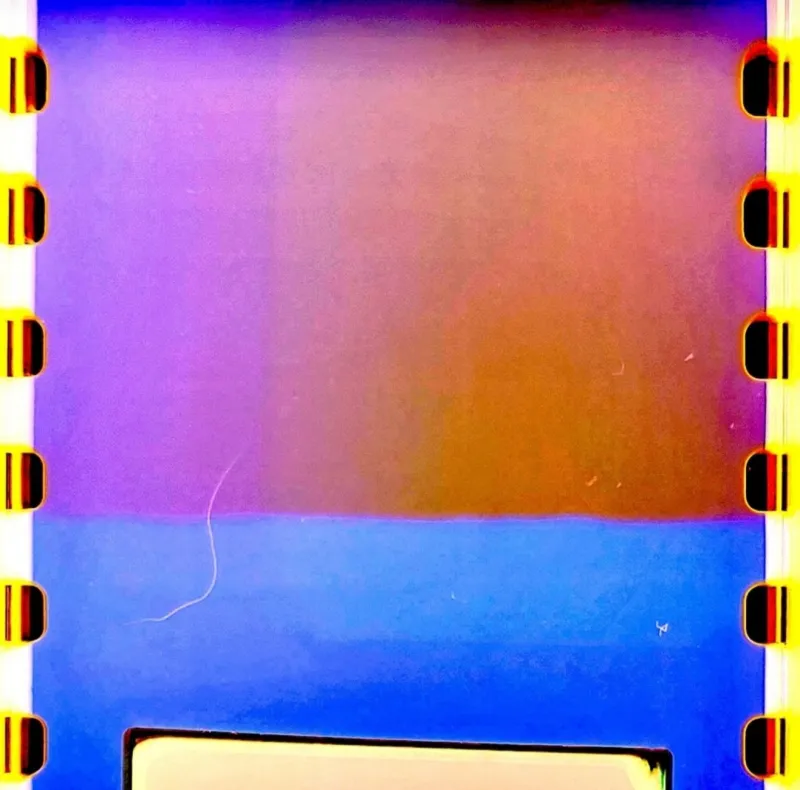
Spend enough time in any analog photography community — the subreddits, the Discord servers, the comment sections under film photography posts — and you'll start to notice something. People aren't apologizing for their dust spots anymore. They're not asking how to fix the scratch that runs through the middle of frame 14. They're not embarrassed about the lens fungus that blooms the highlights into something soft and strange.
They're showing it off.
Something has shifted in the way a significant portion of the film photography world thinks about imperfection. What used to be a flaw to correct has become, for a growing number of photographers, the most honest thing about an image.
The Perfect Image Problem
For context, consider what the last decade of digital photography has produced. Cameras that shoot 45 megapixels of tack-sharp, noiseless data. Lens correction profiles that automatically straighten every barrel distortion and vignette. Noise reduction algorithms that scrub images so clean they start to look synthetic. AI sharpening tools that can recover detail from motion blur.
The technology is extraordinary. And the results, increasingly, look kind of the same.
When every camera renders reality with the same clinical precision, when every image can be corrected to the same standard of technical perfection, the photographs start to lose their fingerprints. They look like they came from nowhere and no one.
Film was already pushing back against this tendency — its grain, its contrast curves, its color rendering all carry the unmistakable signature of a physical medium. But some photographers are going further. They want the damage too.
What 'Damage' Actually Looks Like
Let's be specific about what we're talking about, because the imperfections being embraced span a pretty wide range.
Dust and debris on the film plane show up as dark spots or streaks across frames. In a clean scan, these get spotted out. In the anti-clean aesthetic, they stay — markers of the physical process, evidence that the image passed through a real machine in a real world.
Scratches — from film transport mechanisms, from handling, from damaged camera rails — run through frames as lines of light or dark. They're almost impossible to replicate convincingly in post-processing, which makes them genuinely unique to each roll.
Lens fungus and coating separation create internal flare, reduced contrast, and soft, blooming highlights. A lens with fungus renders light differently than a clean one — not worse, necessarily, just different. More diffuse. More atmospheric.
Light leaks from failing camera seals wash frames in streaks of color — reds and oranges and the occasional green — that interact unpredictably with the subject matter. We've covered light leaks here before, but it bears repeating: no filter accurately simulates what happens when actual photons sneak through a failing foam seal.
Scratched or abraded lens glass introduces aberrations, halation, and softness that varies across the frame. Some photographers actively seek out lenses that have been through physical trauma for exactly this reason.
The Photographers Who Wear Their Damage
This isn't just a vibe. There are photographers building serious, coherent bodies of work around these qualities.
Sam Holloway shoots documentary work in Detroit using a collection of cameras he describes as "barely functional." His workhorse is a Canon AE-1 with a cracked mirror box, a sticky shutter, and a light seal that's been failing for two years. He's replaced the seal three times. He keeps letting it fail.
"The leaks started showing up in my street work and I realized they were doing something compositionally that I'd never have planned," he says. "A streak of red light cutting across a face. A blown-out corner that draws the eye somewhere unexpected. I started making decisions about where to position the leak. It became a tool."
His work has been shown in two group exhibitions in the Midwest. The leaks are the first thing people comment on.
In Los Angeles, photographer and zine-maker Priya Mehta shoots exclusively with lenses that most collectors would consider damaged goods — fungal growth, delaminated coatings, deep cleaning scratches. She sources them specifically for their rendering characteristics.
"I have a 50mm that's basically destroyed," she says. "It has this coating separation that turns every light source into this huge, soft bloom. It looks like the world is slightly on fire. I've used it for three zines. People ask me what filter I use and I tell them it's a 1970s lens that someone dropped."
Mehta sees the aesthetic as a direct response to the visual culture she grew up in. "Everything online is so corrected, so smooth, so optimized. When I put out images that are scratched and dusty and a little broken, people respond to them like they're breathing. Like they're real. Because they are."
The Cultural Undercurrent
There's something broader happening here that's worth naming.
We're in a moment of intense cultural fatigue around digital perfection. Heavily retouched social media imagery has produced documented anxiety around body image and lifestyle expectations. AI-generated content is flooding platforms with technically flawless images that feel hollow. Filters and presets have created a visual monoculture where everything looks like it was shot in the same golden hour by the same algorithm.
The anti-clean aesthetic in film photography is, at least in part, a refusal of all of that. It's a way of saying: this image has a body. It got scratched. It got dusty. It came from somewhere and something happened to it on the way here.
That's not a small thing in 2024.
"Damage is proof," says Holloway. "Proof that the image is real, that the camera is real, that the moment was real. In a world full of generated content, a scratch on a frame is almost like a signature."
How to Let Your Gear Misbehave
If you want to experiment with this approach without just waiting for your gear to fall apart, there are some entry points.
Start by not spotting your scans. Let the dust stay. Look at what it does to the image before you decide it's a problem. Sometimes it is. Sometimes it's not.
Shop for lenses by their rendering, not their condition. A lens with fungus or coating issues will often sell for a fraction of a clean copy. Ask the seller specifically about the rendering — some sellers know, and the images they post will tell you a lot.
Let a camera seal fail once before you replace it. Shoot a test roll through a camera with a marginal seal and see what happens. You can always repair it. First, see what you've got.
Scan without correction profiles and see what your scanner's raw output looks like before you apply any normalization. The uncorrected version is often more interesting.
Imperfect, On Purpose
None of this means shooting carelessly or fetishizing failure for its own sake. The photographers doing this work are deeply intentional — they're choosing which imperfections to keep, learning how their damaged tools behave, and building visual languages around what that behavior produces.
That's not an accident. That's craft.
The frame with the scratch running through it, the portrait bloomed by a fungal lens, the street scene cut through with a red light leak — these images carry something that a technically perfect photograph often doesn't. They carry evidence of their own making.
In a world optimized to erase that evidence, that might be the most radical thing a photographer can do.