The $20 Gamble: A Flea Market Checklist for Spotting a Dead Camera Before You Pay
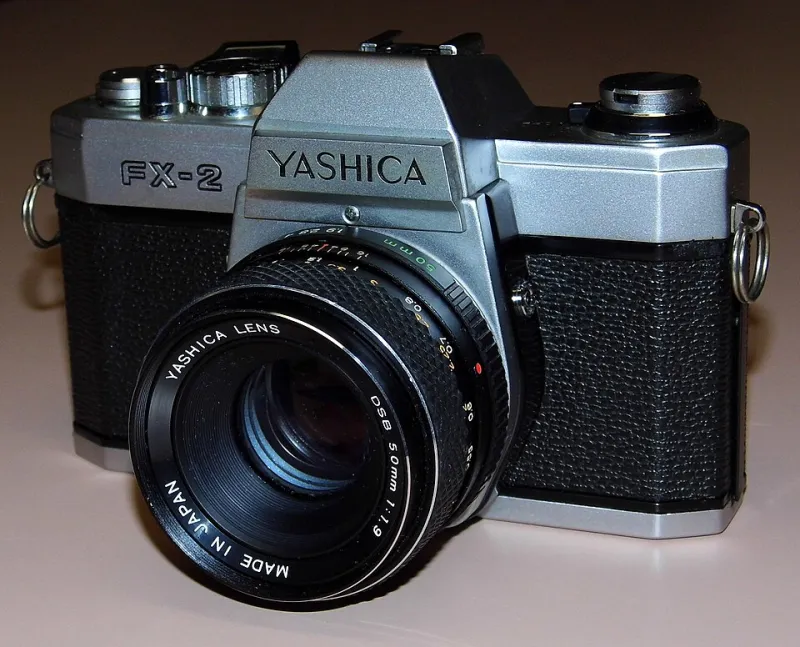
Photo: Joe Haupt from USA, CC BY-SA 2.0, via Wikimedia Commons
Every Saturday morning across America, the same scene plays out. A folding table in a driveway in Columbus, a church basement sale in Portland, a booth at the Rose Bowl flea market. On that table: a shoebox of old cameras, priced at ten, fifteen, twenty bucks a pop, and a seller who has no idea whether any of them work.
You've got about a minute before you either walk away or hand over a twenty. Here's how to spend it.
Start With the Battery Door (Seriously)
It sounds trivial, but the battery compartment tells you more about a camera's history than any other single spot. Pop it open. You're looking for the crusty blue-green residue of leaked alkaline cells or the chalky white powder of old carbon-zinc batteries. Corrosion on the contacts means the camera sat dead in a drawer for a decade — and that acid can migrate into the electronics, killing circuits you can't see or fix.
Mild corrosion on the contacts themselves? Cleanable with a pencil eraser and vinegar on a cotton swab. Corrosion that's spread down into the body? Walk away, no matter how pretty the camera is.
The Shutter Doesn't Lie
If the camera takes batteries, install fresh ones (bring an assortment — LR44s, 4LR44s, and CR123s cover most of the classics). Then fire the shutter at every speed, listening carefully.
- At 1 second and 1/2, you should hear a distinct, measured lag. If it snaps instantly, the slow-speed mechanism is gummed up.
- At 1/125 and 1/250, the speeds should sound identical — most shutters only run true at these two settings.
- At 1/1000, listen for a crisp, almost imperceptible rip.
Open the back, hold the lens up to a light source, and fire the shutter while looking through it. You want to see light through the aperture at slower speeds. A shutter that opens and never closes, or doesn't open at all, is a dealbreaker unless you're getting the camera for parts money.
Foam Seals: The Silent Roll-Killer
Light seals are the foam strips lining the camera's back door and hinge. Over thirty or forty years, they turn to sticky black tar. This isn't just gross — degraded seals mean light leaks, and light leaks mean fogged frames and ruined rolls.
Press a fingertip gently against the foam. If it comes away black or the foam crumbles, budget ten bucks and an afternoon for a foam replacement kit (they're cheap online and the job takes an hour with a toothpick and isopropyl alcohol). Some sellers will knock a few dollars off if you point it out. Most won't know what you're talking about.
The Fifteen-Second Glass Check
Hold the lens up to a bright window and look through it wide open. What you're hunting for:
- Haze or fog — internal fungus or lubricant vapor. Fungus looks like spiderwebs or frost; it spreads and etches glass. Hard pass.
- Separation — rainbow-edged patches at the lens edges where adhesive layers split. Sometimes it's tolerable, usually it's not.
- Cleaning marks — tiny spiral scratches on the front element. A few won't ruin images; a haze of them will.
- Aperture blades — turn the aperture ring and watch the iris. Blades should snap clean and dry. Oil on the blades means they'll stick, and sticky blades mean your f/16 shots are all f/2.
The Fifteen Questions Worth Asking
Most sellers know nothing, but the questions cost nothing and occasionally strike gold:
- Did this belong to a family member?
- Do you know if it was stored in a basement or attic?
- Is there a case or manual?
- Has it been in a hot car or a damp garage?
- Any idea when it was last used?
- Are there batteries in it right now?
- Can I put a fresh battery in to test it?
- Would you take fifteen instead of twenty?
- Do you have other cameras not out on the table?
- Any film inside I should know about?
- Did it ever get dropped or repaired?
- Is the strap original? (Tells you about care.)
- Do you have the lens cap and rear cap?
- Would you hold it while I check the back?
- Can I come back if it doesn't work?
Question ten is the sleeper. People find half-shot rolls in old cameras all the time — and undeveloped film from someone's family archive can be worth more than the camera.
The Models That Rarely Disappoint
While you're scanning the shoebox, keep an eye out for the usual suspects: Canon AE-1s and A-1s, Nikon FM and FE bodies, Minolta X-700s, Olympus OM-1s, Pentax K1000s. These are the Camrys of film — millions made, parts plentiful, and honest about their condition. A clean one at twenty dollars is a fair deal. A clean one at ten is a steal.
Be warier of late-80s electronic compacts and anything with a motor drive and no manual controls. When their electronics go, they go completely, and no one repairs them.
When to Break the Rules
A dead meter in a fully mechanical camera like a Pentax K1000 is a ten-dollar fix or a reason to shoot sunny-16. Stiff foam is a weekend project. A sticky advance lever might just need a drop of care. The only truly fatal diagnoses are shutter death, fungus in the glass, and battery acid in the brain.
Sixty seconds. Battery door, shutter, seals, glass, questions. That's the whole religion. Now go hit the yard sale circuit — somebody's grandfather's Nikon is sitting in a shoebox in a driveway in your zip code right now.