Stop Trusting That Little Needle: How Your Camera's Meter Is Killing Your Exposures

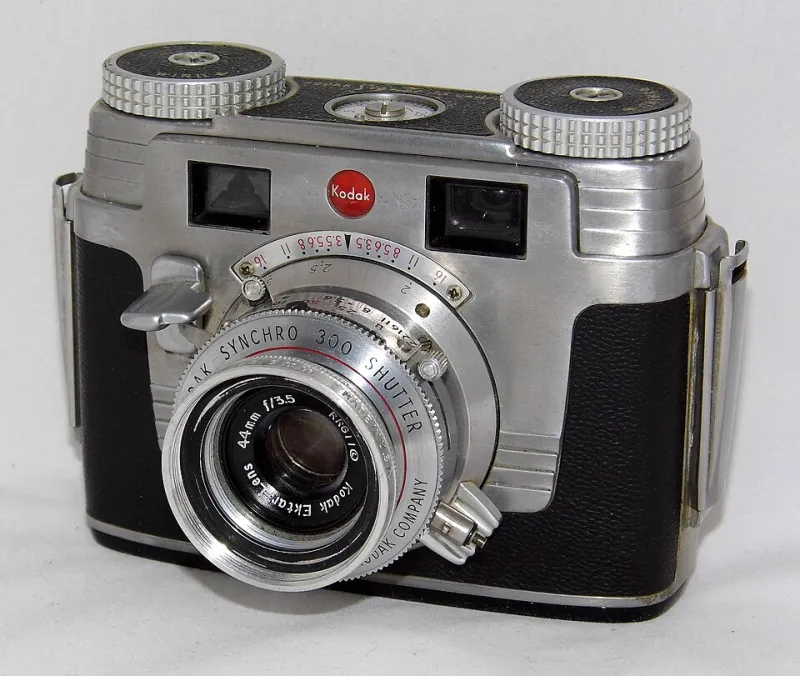
Photo: 美國之音 張永泰, Public domain, via Wikimedia Commons
There's a moment every analog photographer knows. You're standing in front of a killer scene — maybe it's a friend backlit by a window, or a neon-soaked street in downtown Nashville at 10 PM — and you let the camera's meter make the call. You shoot. You wait. The scans come back and the shot is blown out, muddy, or just... off. The meter said it was fine. The meter lied.
Here's the uncomfortable truth: that little meter inside your vintage SLR or point-and-shoot was engineered with a very specific set of assumptions baked in. When reality doesn't match those assumptions — and in real-world shooting, it often doesn't — you're going to pay for it on the negative.
Let's break down exactly why this happens, and more importantly, what you can do about it.
The 18% Gray Myth Your Camera Still Believes
Every reflective meter — the kind built into your camera — is calibrated around a single, stubborn idea: that the world, averaged out, reflects about 18% of the light that hits it. This is the famous "middle gray" standard, and it's been the foundation of exposure metering since the mid-20th century.
The problem is that your scene probably isn't average. Snow-covered fields are way brighter than 18% gray. A dark-skinned subject against a shadowy brick wall is way darker. When your meter looks at either of those scenes and tries to render them as middle gray, it gets the exposure dramatically wrong.
With digital, you chimp the screen and dial it in. With film, you don't get that luxury. You have 36 frames (or 24, or 12 if you're shooting medium format inserts), and every one you waste to a meter miscalculation stings — financially and creatively.
Mixed Lighting: Where Built-In Meters Go to Die
If there's one scenario that reliably wrecks in-camera metering, it's mixed lighting. Think about shooting at a house party where there's a lamp in one corner, a window letting in blue late-afternoon light, and a string of warm Edison bulbs overhead. Your camera's meter is looking at all of that simultaneously and averaging it into nonsense.
The same issue crops up on the street — especially in cities where you've got streetlights, neon signs, car headlights, and shadowed doorways all competing in the same frame. Evaluative or matrix metering systems try to be smart about this, but they're working with reflected light from the whole scene. They don't know what you actually care about in that frame.
Shoot a roll of Kodak Portra 800 at a concert venue and let the meter run the show? Good luck. You'll get a mix of overexposed highlights from stage lighting and crushed shadows everywhere else, and no amount of scanning wizardry fully rescues that.
Unconventional Film Stocks Make It Worse
Modern film stocks from Kodak and Fujifilm are well-documented, and even then meters struggle. But once you start shooting anything outside the mainstream — think CineStill 800T, Lomography stocks, or especially expired film — the gap between what your meter thinks and what your film actually needs widens considerably.
CineStill 800T, for instance, is a tungsten-balanced stock that behaves differently in mixed or daylight scenarios. Expired film often needs anywhere from one to several stops of overexposure depending on how it's been stored. Your camera's meter has absolutely no idea about any of that. It's reading reflected light and spitting out a number based on assumptions that simply don't apply.
If you're experimenting with off-label or vintage stocks, trusting the meter blindly is a fast track to wasted film.
The Sunny 16 Rule: Old School, Still Deadly Accurate
Before built-in meters were standard equipment, photographers used a system so simple it sounds like a joke: if it's a sunny day, set your aperture to f/16 and your shutter speed to the reciprocal of your film's ISO. Shooting ISO 400 film? Set 1/400 (or 1/500 on most cameras). That's it.
Sunny 16 is shockingly reliable in daylight, and once you internalize it, you can start adjusting from there with real confidence. Slightly overcast? Open up to f/11. Heavy overcast or open shade? f/8. Deep shade or golden hour? f/5.6. This mental model keeps you grounded in the physics of light rather than the guesswork of a reflective meter.
Practice it on a few rolls and you'll start developing genuine intuition for exposure — something no meter can give you.
Incident Meters: The Tool That Changes Everything
If you're serious about nailing exposure on film, a handheld incident light meter is the single biggest upgrade you can make — and it has nothing to do with your camera.
Unlike your camera's reflective meter, an incident meter measures the light falling onto your subject rather than bouncing back from it. That dome-shaped diffuser you hold toward the light source? It doesn't care if your subject is wearing a white dress or a black jacket. It's measuring the actual illumination, which is exactly what your film needs to know.
Good options range from the legendary Sekonic L-308X (around $220 new, often cheaper used) to vintage Weston or Gossen meters that you can score on eBay for under $50. Even an older analog incident meter, properly calibrated, will outperform your camera's built-in reflective meter in tricky lighting situations every single time.
For portrait shooters especially, the incident meter is transformative. You walk up to your subject, point the dome toward the light source, take the reading, set your camera manually, and shoot. No matrix averaging. No guessing. Just physics.
Zone System Thinking Without the Darkroom Obsession
Ansel Adams' Zone System gets a reputation for being complicated, but the core idea is genuinely useful for any film shooter, even if you're just dropping your rolls at a lab in Portland.
The basic concept: exposure is about placing your subject's tones where you want them on a scale from pure black (Zone 0) to pure white (Zone X). When you meter a scene, you're not just finding "correct" exposure — you're deciding which part of the scene gets priority.
In practice, this means learning to spot meter specific areas of your scene and then compensate deliberately. Metering off a bright sky and opening up two stops to protect shadow detail. Metering off a dark subject and closing down slightly to preserve highlight texture. You're making creative decisions, not just accepting whatever the camera suggests.
You don't need a darkroom or a Zone System textbook to start thinking this way. You just need to stop treating your meter's output as a verdict and start treating it as one data point among several.
Building Your Own Exposure Instincts
Here's the long game: every roll you shoot with deliberate, conscious exposure decisions — rather than just following the meter — teaches you something. You start to recognize what a scene needs by looking at it. You develop a feel for how your favorite film stocks handle different lighting conditions. You stop being surprised by your scans.
Keep notes, at least for a while. A small notebook or a voice memo on your phone noting the scene, your settings, and the conditions costs you nothing. When you see the results, you'll have a reference point. Over time, that feedback loop builds real expertise.
The meter in your camera is a tool, not an authority. It was designed for average scenes under predictable conditions, and the shots worth taking are rarely either of those things. Learn when to use it, when to override it, and when to put it out of your mind entirely — and your film photography will level up in ways that no new camera body ever could.